Thula Rantz
The Boys in the BoatThula Rantz was an aspiring violinist whose marriage to Harry Rantz placed her at the center of a family repeatedly remade by loss, relocation, and strained domestic life. As Joe Rantz’s stepmother, she offered him a new home after his early childhood disruptions, but their relationship deteriorated until Harry sent Joe away at her insistence. Thula later gained recognition as a performer, yet she died before Joe could resolve what he felt about her or show her the person he might become.
Identity and Ambition
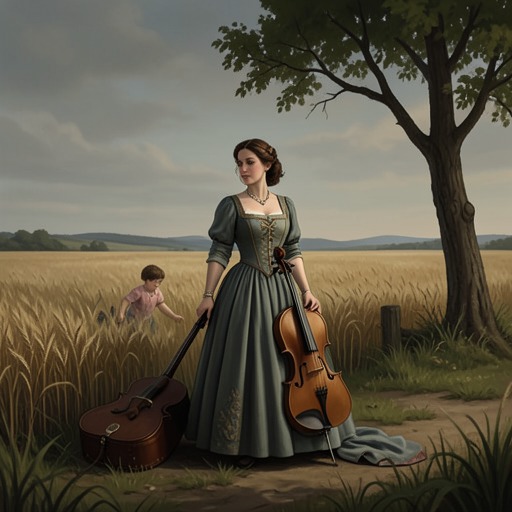
Thula was the twin sister of Harry Rantz’s first daughter-in-law. At twenty-two, she married Harry, who was seventeen years older. Her upbringing on an isolated wheat farm had left her longing for a life beyond farm work; she was educated and artistic, and hoped to become first violin in a major symphony orchestra. Harry’s restless energy, mechanical creativity, and ability to make future possibilities seem imaginable helped attract her, though the reasons she chose him remained less clear to her family.
The marriage began in April 1921, when Thula and Harry crossed the state line and married on the shores of Lake Coeur d’Alene, much to the displeasure of her parents. Harry completed a house in Spokane, and Joe, who had been living with his older brother Fred Rantz, moved in with his father and the stepmother he scarcely knew. The new house gave Joe, for a time, an impression of domestic stability. That early period did not last: the family’s later moves and Thula’s own unrealized ambitions placed increasing pressure on the household.
Marriage, Motherhood, and the Conflict with Joe
In Boulder City, Thula found herself far from the artistic life she wanted. Her social circle was limited, and the work of caring for children and managing the household left little room to practice. The conditions affected her violin playing: cold winters made practice difficult, while the dry Idaho summers left her hands sore. As her hopes of a professional career seemed increasingly remote, she also compared her circumstances with those of her sister, who lived comfortably in Seattle. Resentment and frustration accumulated in the cabin.
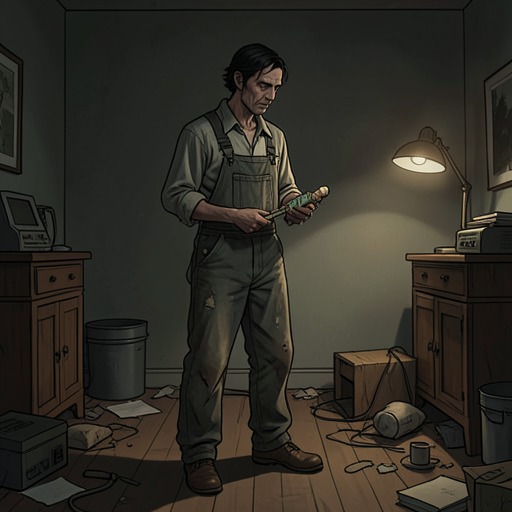
The strain became acute during a summer when Thula was pregnant with her third child. After a day of household work, she was preparing supper while worrying that Joe’s appetite left too little food for her own children. Joe was tending his vegetable garden, a source of pride because its produce helped supply the family table. When his eighteen-month-old half-brother Mike followed him and pulled up young carrots, Joe shouted at the child, who began crying. Thula took Mike inside, then later demanded that Harry punish Joe physically. Harry instead spoke to his son. Thula regarded his response as too lenient and said she would not remain in the same home with Joe.
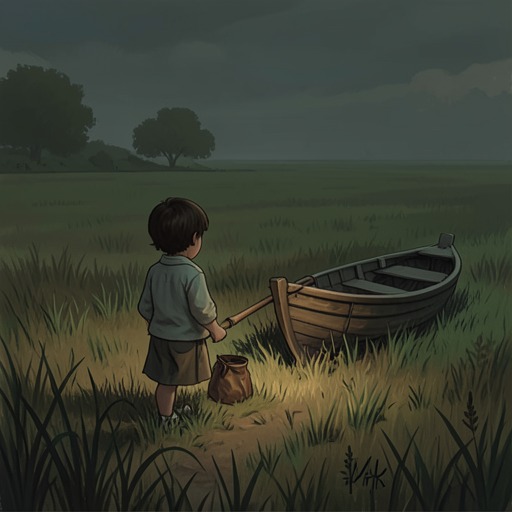
Harry could not persuade Thula to change her position. He told ten-year-old Joe that he would have to leave. The next morning, Harry arranged for Joe to sleep in the schoolhouse in exchange for chopping and splitting wood to keep its fireplace supplied. Thula would no longer cook for him, so Joe earned his meals by carrying food and dishes at the company cookhouse. The arrangement began his life in exile: the conflict between Thula and Harry over discipline had become a decisive separation between Joe and the household.
Exile and the Unfinished Relationship
Thula’s demand that Joe leave was not the whole of their relationship, but it shaped what followed. Joe had experienced her as the adult who insisted he be removed from the family home; in later years, he wondered whether he could have done more to get along with her and understand the narrowness of her circumstances. His reflections held both recognition and limit. He could imagine ways he might have responded differently, but he did not feel unbounded regret, and the conflict could not be repaired after her death.
The family’s circumstances continued to change. Thula and Harry eventually lived in a half-finished house in Sequim, and later returned to Seattle. In a summer when their four children were left short of food at home, Joe and Joyce Simdars took the children for ice cream and bought provisions before returning them. Harry and Thula came back the next day; Joe learned that their outings had apparently been recurring through the summer. This episode sits alongside Thula’s later pursuit of music, showing a family life in which her desire to reclaim time for herself coexisted with the needs of the children and the responsibilities of the household.
Musical Recognition and Final Years
Thula’s prospects changed after Harry obtained a job at the Golden Rule, giving her time to pursue violin more seriously. Years of practice, including periods in Idaho and Sequim, led to an audition in Los Angeles with Fritz Kreisler, one of the leading violinists of the era. Thula returned jubilant, reporting that Kreisler had praised her as the greatest female violinist he had heard. The audition did not immediately secure her a place in a major orchestra, but it made that future seem possible and gave her a measure of recognition she had long sought.
That spring and summer, KOMO Radio aired live performances by Thula, allowing thousands of listeners in the Seattle rowing and labor-conflict city to hear her play. For her, the broadcasts marked a new public life after years in which practice and ambition had been constrained. She was eager to celebrate and to spend time outside the house. The success was local rather than the full orchestral career she had imagined, but it represented a meaningful change in what her life could contain.
Death and Aftermath
On October 25, Fred Rantz met Joe at the shell house and told him that Thula had died from septicemia caused by an obstructed bowel. Joe was numb. She had been the closest thing to a mother he had known since his own mother’s death, despite the rupture that had sent him away. He remembered the earlier years in Spokane, when they had sat together on the backyard swing and gathered around the piano, as well as the later conflict and his questions about how he might have treated her differently.
The day after her death, Joe went to Harry’s house and sat with his father and the children. They spoke about Thula’s life; Joe recalled what he remembered fondly, while Harry tried to talk about a recent trip to Medical Lake and became too upset to continue. Joe was particularly concerned for his half-siblings, knowing from his own childhood what it meant for a child to be motherless. Harry did not leave as he had after losing his first wife. Instead, he told Joe he planned to build a house where the family could live together and asked him to come home when it was finished. Joe could not yet trust that promise, and left uncertain and angry. Thula’s death thus closed any possibility of repairing their relationship while bringing Joe back into the orbit of the family from which she had once insisted he be removed.